In the eighteenth century, a guy named Wolfgang von Kempelen created a machine that seemingly could play chess. It was a large wooden box with a chessboard and a Turkish-looking mechanical man sitting at it, ready to play chess with anyone. As a person made moves on the chessboard, the Turk would reach out its mechanical hand and make its counter-move. This amazing device was demonstrated in all European royal courts and became known as the Mechanical Turk. People were astonished and entertained by the magic of a mechanical figure that could play chess and make smart moves.
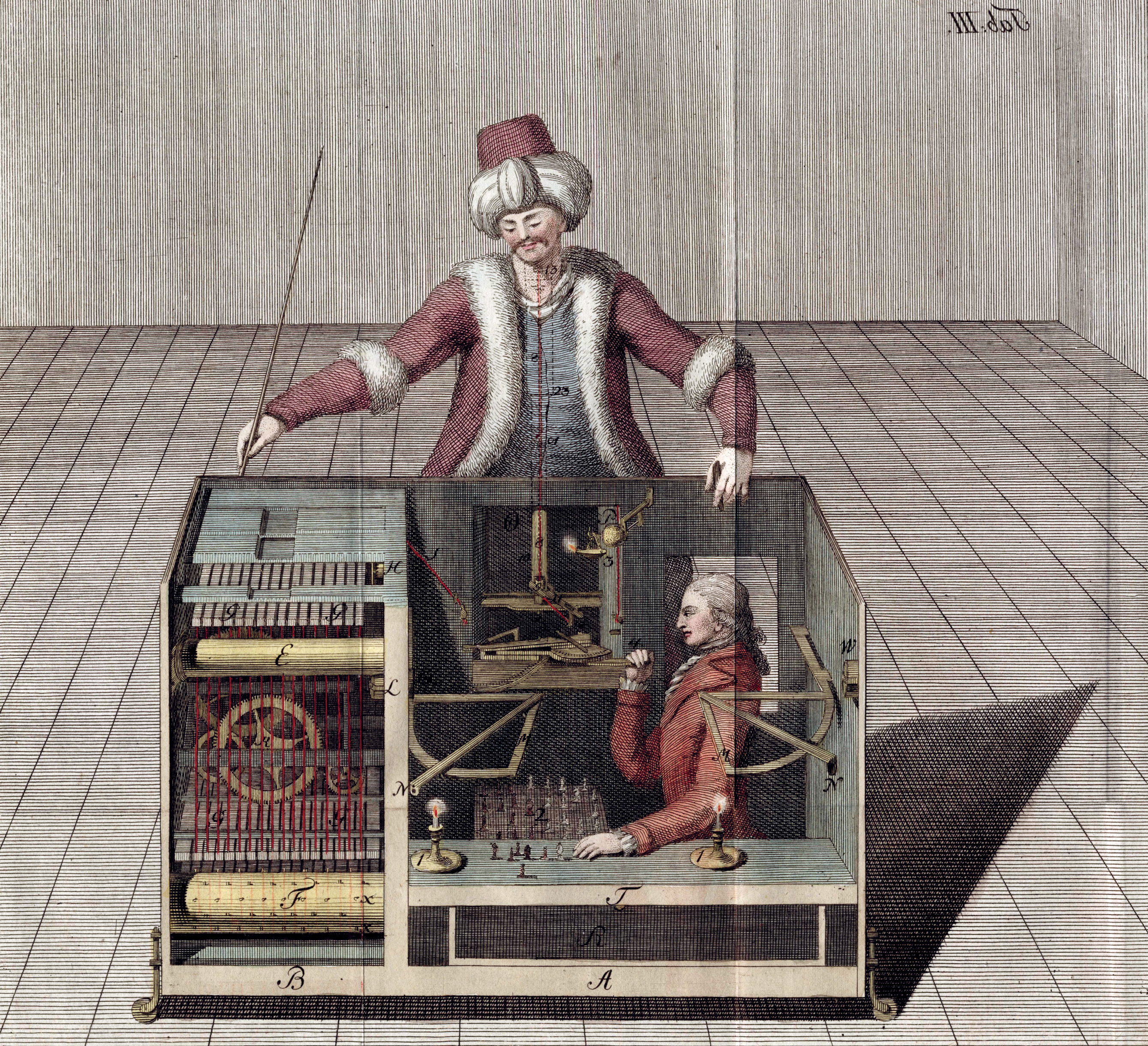
The Mechanical Turk, circa 1770.
Eventually, of course, it was discovered that there was actually a human hidden inside the box who was controlling the Mechanical Turk. It wasn't magic after all, but everyone still loved it. The concept proved so enduring that Amazon later named their crowdsourced human-task platform Amazon Mechanical Turk directly after this device.
There are several examples of startups using the Mechanical Turk approach to build an MVP that looks like magic is going on, but the magic is actually being done manually. I mentioned previously how, when the streaming music pioneer Pandora launched, humans manually created the playlists, even though users thought the software was personalizing playlists on the fly.
When Wealthfront launched their automated investing platform, the "automation" was just plain old humans sitting at desks. In both cases, they were able to get learnings from their Mechanical Turk MVPs that then informed the building of the actual automated product.
Customers thought it was a slick digital process, but it was actually just Nick doing everything manually and learning as much as possible about customers.
Zappos began as a website called ShoeSite.com. Founder Nick Swinmurn would take pictures of shoes at stores around town and post them to the website. When orders came in, he would literally drive to the store, buy the shoes, and manually ship them to the customer. Customers thought it was a slick digital process, but it was actually just Nick doing everything manually and learning as much as possible about customers. Based on the learnings, he met Tony Hsieh, changed the name to Zappos, raised the necessary capital, and built out the digital process and inventory that is Zappos today.
Sometimes this is called a Wizard of Oz MVP since it appears to be "great and powerful," but it's just an average dude behind the curtain.
Whether you want to call it Wizard of Oz or Mechanical Turk, many great startups have used this approach to create an MVP for a new product or service.